
One parent noticed morning potty time finally turning regular after a year of guesswork, then more parents noticed, then many thousands more. Begin Health now reports more than 140,000 families using its prebiotics for steady poops and daily gut support, one stick pack joined to one meal at a time.
By age 3 the gut microbiome is largely set, inside the first 1,000 days. Madeline Lauf picked that early window and tied the product to it. She had chased a better kids milk, heard parents return again and again to picky eating and hard stools and daily laxative routines, and chose instead a single powder for ages 1 and up that could be taken each morning without cold storage.
Lauf spent her childhood in rural Illinois, where she watched heavy use of fast food and processed food affect young children. She began in finance, then moved into tech marketing. During her years in Asia she noticed strong appetite for American infant formula and first aimed for an improved infant formula for Asian markets, then a kids milk. Both concepts did not work.
What you get today is tighter and better recorded. Begin Health offers prebiotic fiber blends for children ages 1 and up and a synbiotic with HMOs for term infants ages 0 to 12 months, formulated with registered dietitians, pediatricians and microbiome researchers. The point of this talk is routine before rhetoric. When to take it, what to mix it with, what to keep apart, and what the label does and does not show.
You say you spent years facing your own gut troubles, testing every answer with no success, and that the future of America starts with our kids. How does that personal history guide the way you design routines for ages 1 and up?
I lived with my own gut trouble for years, testing one fix after another with little progress. That history makes a person study panels closely. It also leaves a person wary of fast promises.
When we say the future of America starts with our kids, and when kids are unwell it becomes a broad problem, we point to that early period. We build with a PhD in nutritional biochemistry and a registered dietitian, with guidance from pediatric gastroenterologists, pediatricians and scholars, including Belinda Jenks, David Madsen and Dr Gilberto Bultron. We hold a zero tolerance line on fillers or artificial ingredients. We prefer to craft science backed formulas with specialists rather than market sugary kids goods with fillers. For children ages 1 and up, that choice looks like an unflavored and smooth powder in 28 stick packs to stir each day into food or drink, hot or cold.
Investors passed on your better for you ready to drink kids milk for nutrients kids lack, and the company ran out of money. Still the parents most eager about that milk kept mentioning picky eaters dealing with constipation and daily laxative use. How did you choose to build a daily habit around that signal?
That stretch was humbling. We had made a better for you ready to drink kids milk to cover nutrients kids lack. Investors passed and funds ran dry. On paper, that reads like the close.
Still the parents most drawn to the milk kept raising picky eaters dealing with constipation and daily laxative routines. They were not requesting a new taste. They were requesting regular poopies and steady potty time without a chemical laxative route. So we pivoted a third time and introduced Begin Growing Up Prebiotics for kid constipation. I came to see that lifelong health is shaped by how we begin. You have to keep moving, even when quitting feels sensible. We held the bar, no sugar and no artificial fillers, and focused the task on one daily powder a parent could keep up with.
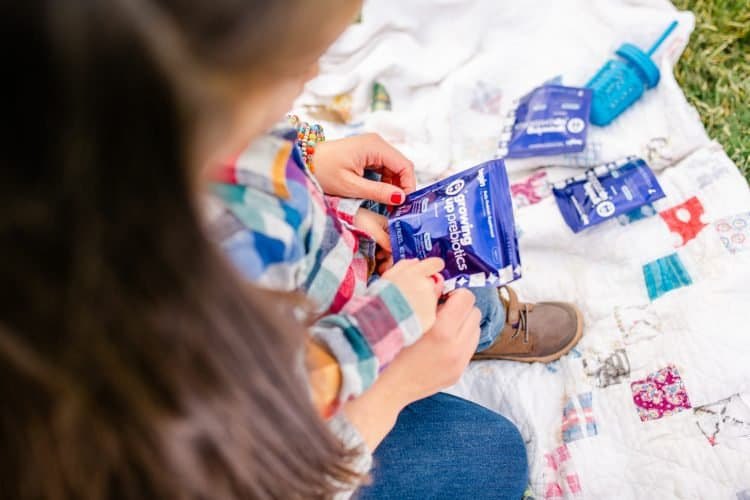
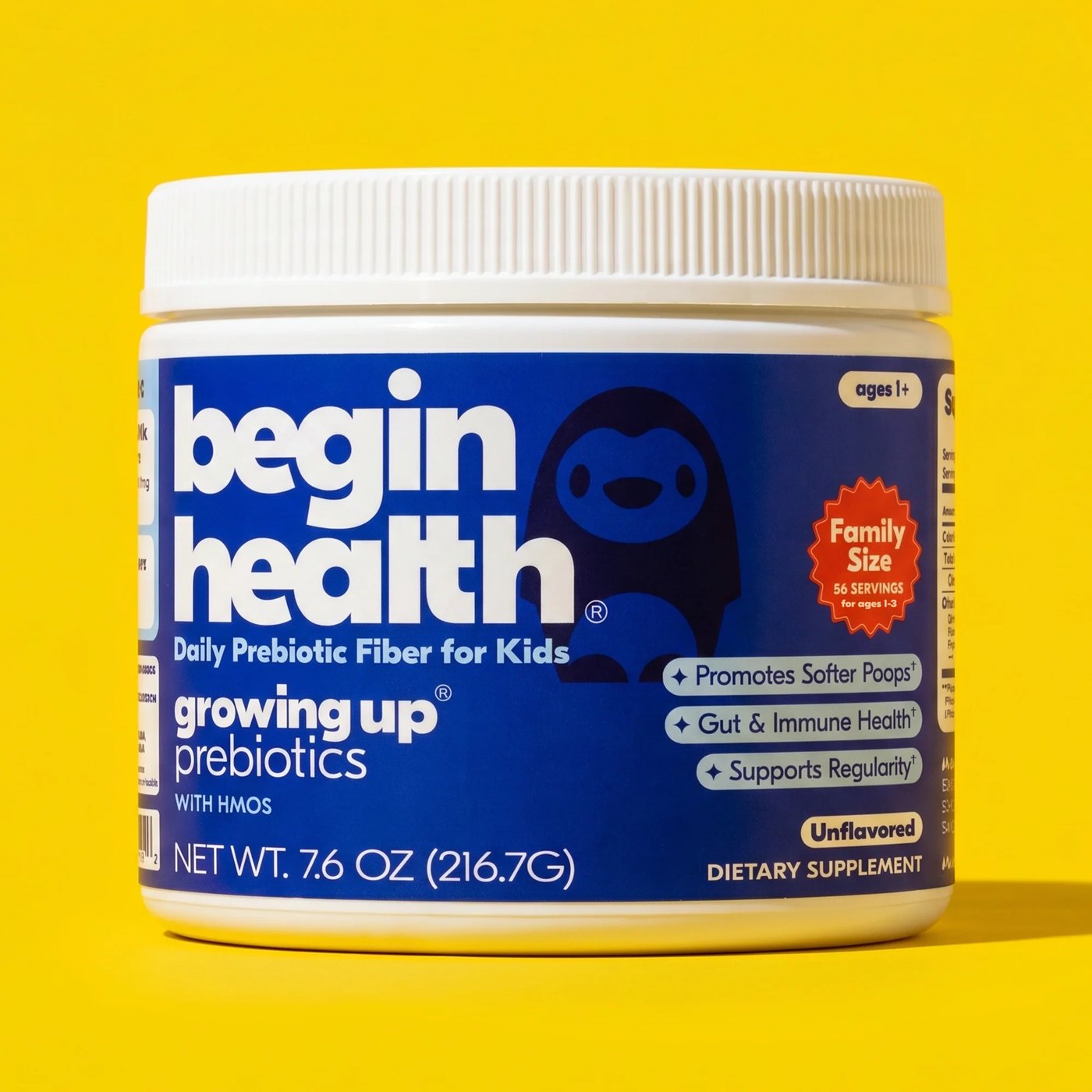
Daily Growing Up Prebiotics costs 70 dollars for 28 stick packs in Family Size Unflavored, with flavored versions at 73 dollars, and it is trusted by over 140,000 parents for regular poopies. What is really inside the stick pack, and how should a careful buyer use the label in a morning routine?
The panel presents a prebiotic fiber supplement for children ages 1 and up. It is a gentle, high quality mix for regular poopies, steady potty time and better gut health. The powder is presented as tasteless and textureless, sealed in 28 stick packs.
What I ask a careful shopper to review is the Supplement Facts panel first, then the other ingredients line. Check the fiber source, the serving weight and the absences. Our exclusion list is no sugar and artificial fillers, no fillers or artificial ingredients. Then check the method. Stir daily into food or drink, hot or cold, with no refrigeration required. The brand calls it a bestseller for regular poopies and constipation support. That phrase states intended use, not a pledge about your child. Save the lot number and hold the box until the stick packs are finished, so any query can be tracked.
You put it simply as probiotics are the live bacteria, prebiotics are the food for those live bacteria, and you favor food for good bacteria over live bacteria that need refrigeration. Why did stability shape the first daily habit you offered?
We often repeat that line about prebiotics and probiotics, where probiotics mean the live bacteria and prebiotics mean nourishment for those live bacteria. That single sentence shapes a lot of production and home storage.
Live bacteria may call for controlled handling and a cold chain to stay potent. Our prebiotic fiber behaves differently. So it stays steady at room temperature. So refrigeration is not needed. You can cook with Begin. You can stir it each day into food or drink, hot or cold. For a home buying for a partner, a child, a parent, that ease counts. A compact shelf of goods held for years must endure a kitchen, a lunchbox and trips. Stability gave us a plain rule. No refrigeration needed, no chemical laxative route, and a fill weight a parent can confirm in the Supplement Facts panel and the other ingredients line.
You first tried to make a healthier infant formula for Asia markets after seeing strong demand for American infant formula while living in Asia, then learned a formula startup was almost like starting a pharmaceutical company. What did that teach you about what a lean startup can usefully make each day?
I grew up in rural Illinois, and honestly, nutrition guidance out there is not very strong. I have always cared deeply about health broadly, and I spent my whole career to that point in tech. While I lived in Asia I kept noticing how much they value those infant formulas in Asia. I come from rural Illinois. I wondered, what if we built a cleaner version.
I soon found a formula venture resembled launching a pharmaceutical firm. The testing, the oversight, the funding, the schedule. It was too heavy for a lean venture. You need to keep adjusting basically until something lands. That early concept showed me to pose another question. Not what might be perfect in principle, but what we can produce to a gold standard with our staff and means, and confirm lot by lot.
I would rather build science backed formulas with experts than sell sugary kid products with fillers.
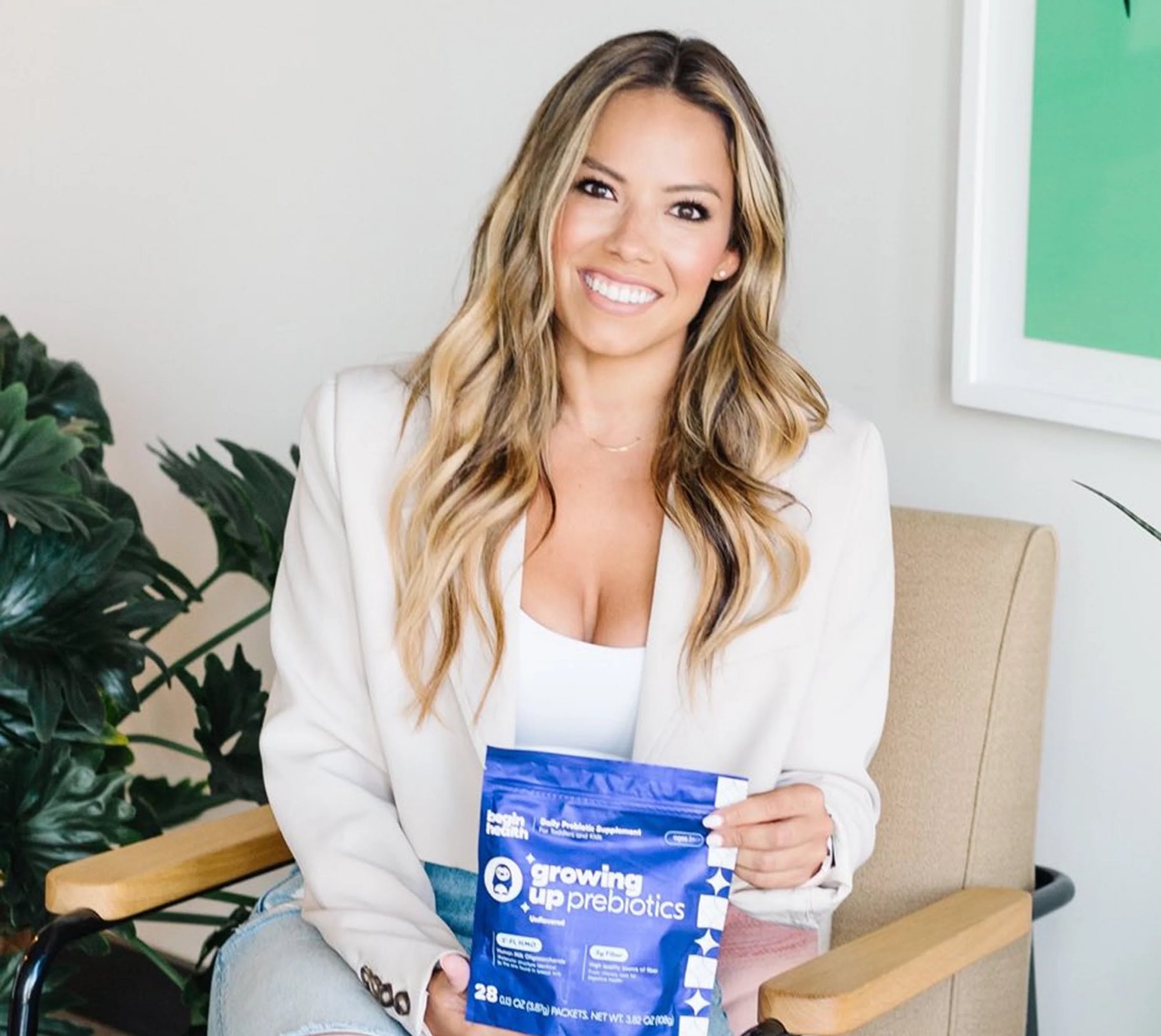
Madeline Lauf
About 70 percent of your immune system lives in your gut, about 90 percent of kids miss daily fiber goals, so pair your Gut Health Test for 199 dollars with coaching plans in a steady morning routine How do fiber, testing and coaching fit a steady routine without promising more than a supplement can show?
Those figures show why we center fiber and food first, not why any single item suits any single child. About 70 percent of the immune system resides in the gut. Ninety percent of kids fall short of daily fiber guidance. That background sits on our site because parents ask for a starting point.
Our Daily Growing Up Immunity combines HMOs with efferra lactoferrin and vitamins D3 and C to help support a healthy immune system, in the brand language. Our Gut Health Test at 199 dollars for Baby and Kid, and 537 dollars for Whole Family, provides an easy to read report with insights and next steps, in the store wording. Coaching plans cover history and habits. I view those as distinct tools with distinct labels. The powder lists fiber and companion ingredients. The test lists a report. Coaching lists a plan. None of them alone addresses a condition. When a parent seeks evidence, I direct them to the panel, the lot records and third party testing, not adjectives.
Beginbaby Pre and Pro with HMOs at 42 dollars carries the approach to term infants ages 0 to 12 months as a 3 in 1 synbiotic. Why pair probiotics and HMOs for babies in that daily serving when the kids line relies on prebiotics alone?
Infants begin from another place. The gut microbiome is mostly formed by age 3, within the first 1,000 days. Beginbaby Pre and Pro with HMOs is our 3 in 1 synbiotic with prebiotics, probiotics and HMOs to feed the developing baby gut.
For term infants ages 0 to 12 months, we sought a daily booster that addresses gut health from early days into toddlerhood, regardless of feeding path. HMOs are prebiotics in breast milk that feed useful gut bacteria, so they match our food first view. The probiotic part introduces live bacteria, which revives the stability issue, and so format, storage directions and testing count more here than in the kids prebiotic powder. Parents should note the strain, the count to end of shelf life where given, and the storage instruction, and hold expectations to what the label contains.
Daily Growing Up Magnesium blends magnesium with kiwi powder and prebiotic fiber from agave inulin in 28 servings for 70 dollars. Where do those ingredients begin, and what happens between harvest and the nightly scoop?
I can outline the chain broadly, since that is what we manage and record. Agave inulin begins as fiber from the agave plant. Kiwi begins as fruit that is picked, dried and ground to powder. Magnesium begins as a mineral salt sourced from a supplier, not grown in soil.
From harvest to the finished serving, the phases are drying and milling, extraction or isolation as required, blending to recipe, then encapsulation or stick pack filling to fill weight. Every inbound lot should include a certificate of analysis from the vendor, and completed batches are checked by an outside lab for identity and for contaminants like heavy metals. What I prefer to share over slogans is documentation. Grower or origin, extract ratio or standardized level where relevant, lot and batch numbers, and third party findings. Where a phase remains unclear, we state it. That care is required to use a term like pure responsibly.
You formulate with dietitians, pediatricians and microbiome researchers, and you reject fillers or artificial ingredients you would not give to your own kids. What would it take to make the chain fully traceable, from named grower to finished stick pack kept by the coffee?
Full clarity takes names, dates and amounts at each phase, plus a readiness to disclose gaps. We already identify the specialist side, formulas crafted with a PhD in nutritional biochemistry and registered dietitian, plus Belinda Jenks, David Madsen and Dr Gilberto Bultron. For supply, complete traceability calls for named growers or fisheries, harvest site and date, drying and extraction location and process, extract ratio or standardized marker, encapsulation location, fill weight, and lot level certificates of analysis with outside lab confirmation including heavy metals.
Part of this lives in files and part remains broad on public labels, like agave inulin shown without a stated farm in the store text I have reviewed. To display it entirely, we would have to publish origin per lot and tie the finished batch to those lots so a parent could confirm in under a minute. I prefer to keep adjusting until the concept lands rather than halt when funds fade, and I prefer to use food for good bacteria rather than add layers we cannot verify. That remains the next task.
Closing note from the desk
What we keep is the sequence. Lauf avoided a claim first method. She sat with failed runs, a firm exclusion list and families logging stools with gamecards and stickers, then shaped the smallest product the records could back.
For a routine that survives busy weeks, pair one stick pack with breakfast, keep the box by the kettle or lunch station, and track potty regularity for two weeks before judging. Begin Health aimed to deliver gold standard, science backed nutrition that feeds the gut early to help kids thrive as they grow. In plain terms, that is prebiotic fiber free of sugar or artificial fillers, steady on a kitchen shelf, with named testing and labels a busy parent can scan fast. Talk with a pediatrician or pharmacist first when a medication, condition or infant under one is involved.
Product spotlight
Daily Growing Up Prebiotics, 70 dollars for Family Size Unflavored with 28 stick packs, plus Strawberry Creamsicle and Banana Chocolate at 73 dollars. A prebiotic fiber powder for children ages 1 and up. Take one stick pack daily with food or drink, hot or cold, with no refrigeration required. Anchor it to breakfast and store the box where breakfast happens.
Beginbaby Pre and Pro with HMOs, 42 dollars for term infants ages 0 to 12 months. A 3 in 1 synbiotic with prebiotics, probiotics and HMOs to feed the developing baby gut each day. Take as a daily booster and heed the label for prep, storage and serving amounts.


Rachel Chandler
Rachel runs the news desk and the routine guides at The Daily Capsule. She checks every timing tip against the label and keeps a seven-day pill organizer on her desk as a reminder of who the guides are for.
More from Rachel Chandler →